Master Printmaking Archive & Workshop · Est. 2026
Taller PosadaWorkshop & Elevated Stature · 19th-Century Mexican Zinc Etchings & Penny Broadsides
The calaveras, corridos and street broadsides that Manuel Manilla and José Guadalupe Posada cut for the Antonio Vanegas Arroyo press in Mexico City — sold for a few centavos, read aloud in the plazas, and gathered here from the public-domain collections of the institutions that hold them.
Never enlarged · 300 PPI · Source named on every print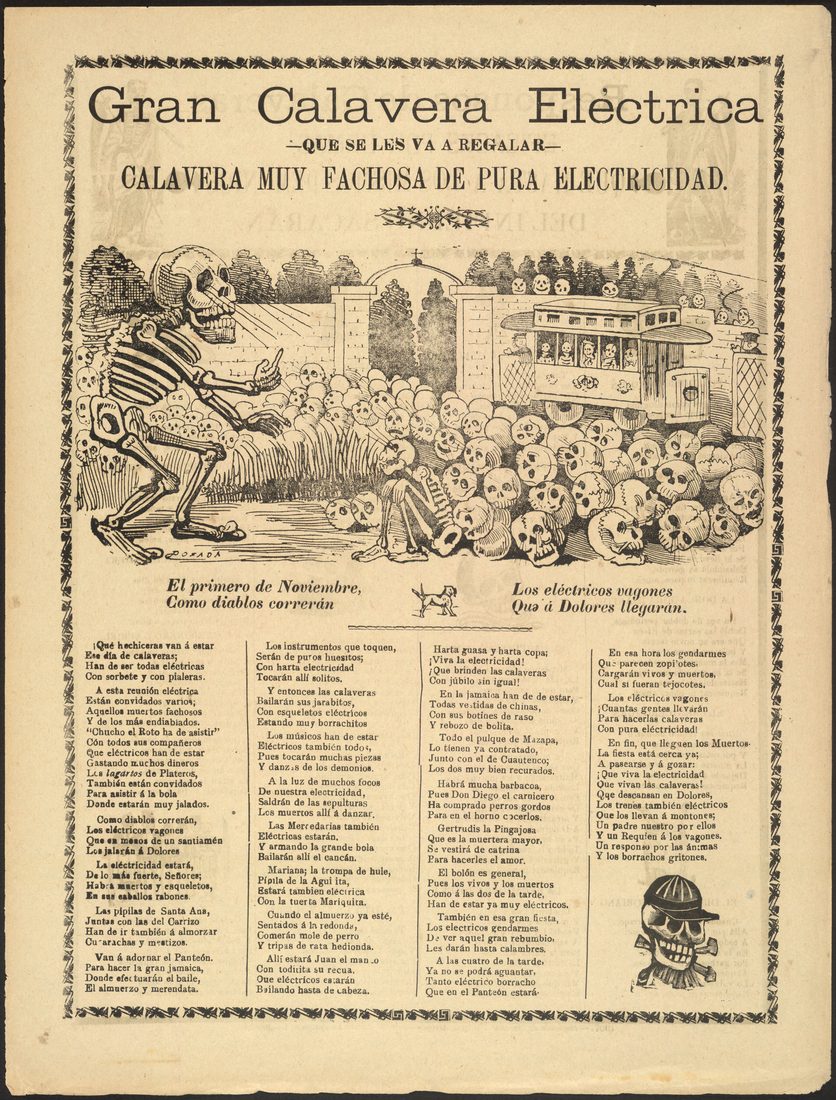
Library of Congress, Prints & Photographs · No known restrictions
Master 5464 × 7188 px · native 18.2 × 24.0 in @ 300 PPI
loc.gov/pictures/item/99615924
The Archive · Room I
Cut in type-metal and zinc, printed on tissue-thin color stock
Each plate below is shown as a reduced web preview. The print you receive is made from the institution’s own master file, at a size that file holds at 300 pixels per inch or smaller — never stretched — with the holding institution and its record number set on the margin.
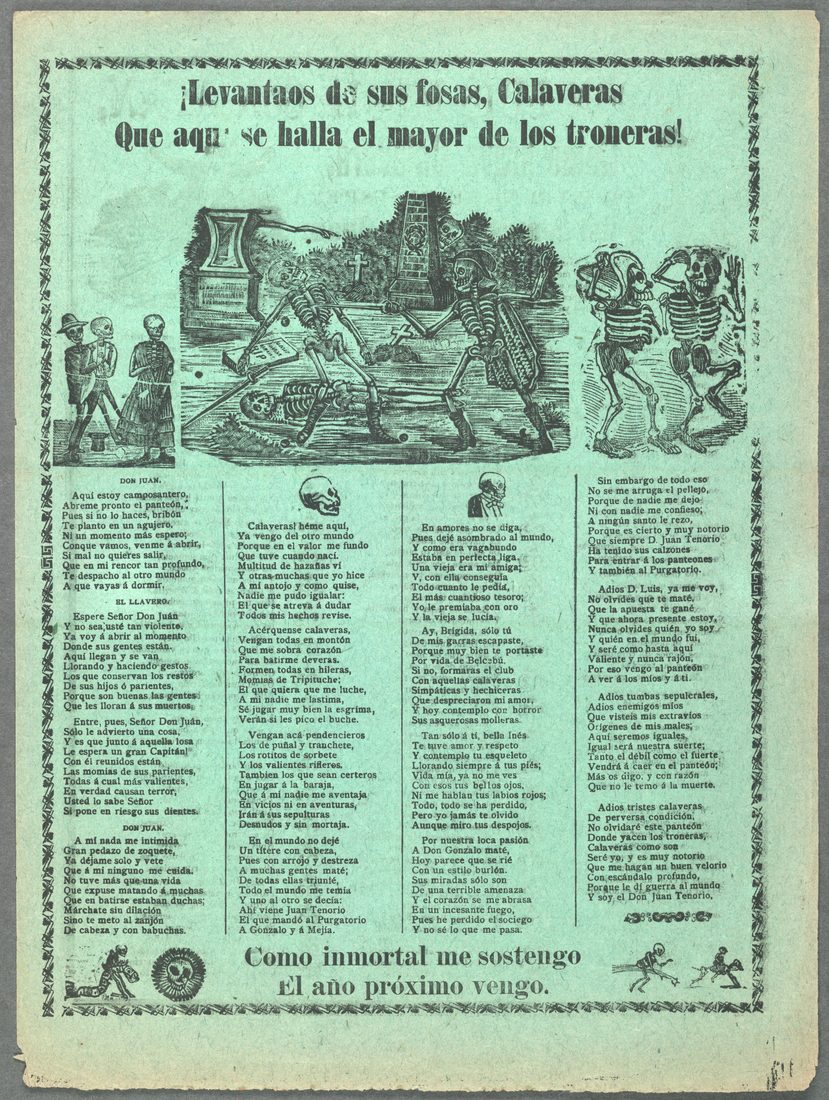
Library of Congress · 5262 × 6985 px
native 17.5 × 23.3 in
loc.gov 99615911
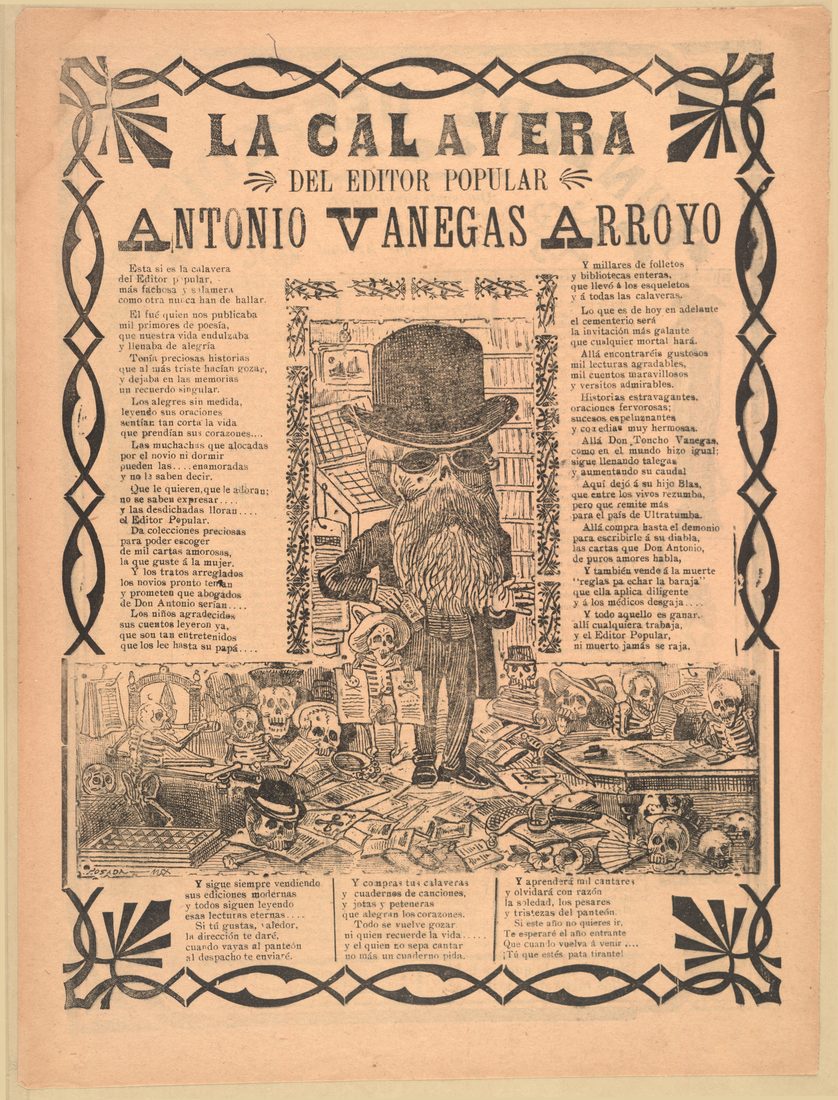
Library of Congress · 4816 × 6325 px
native 16.1 × 21.1 in
loc.gov 99615950
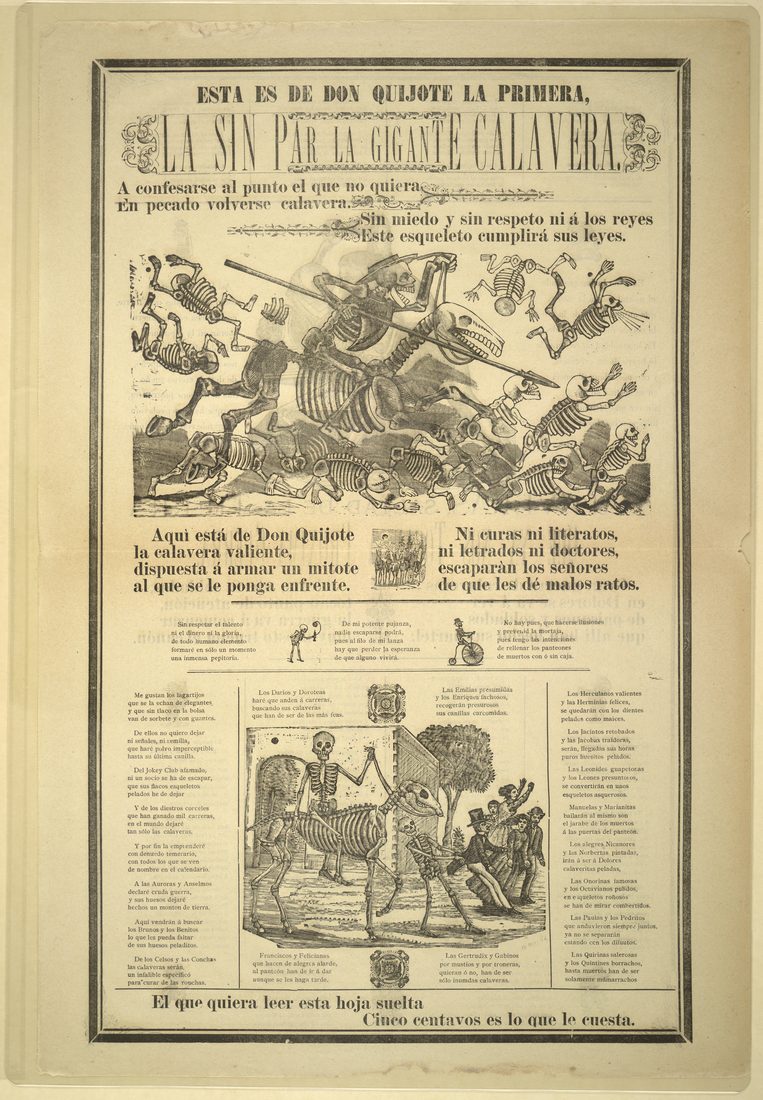
Library of Congress · 3864 × 5571 px
native 12.9 × 18.6 in
loc.gov 99615945
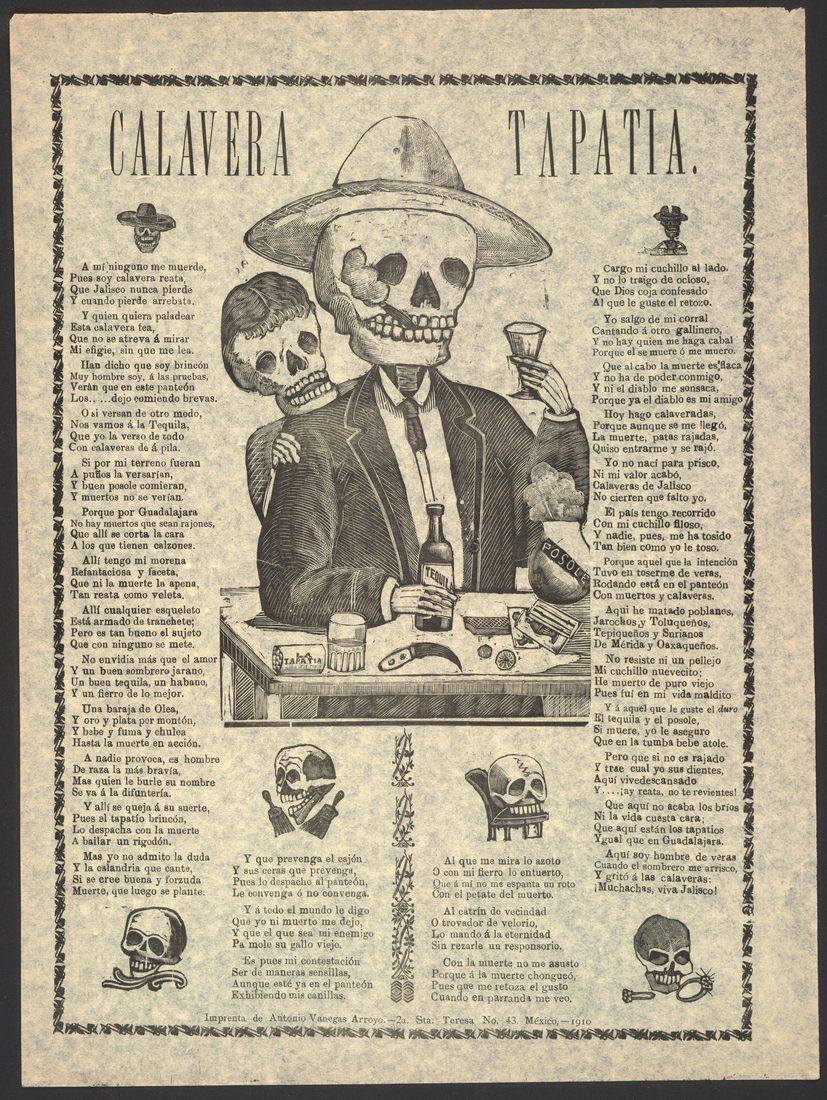
Library of Congress · 4622 × 6148 px
native 15.4 × 20.5 in
loc.gov 99615908
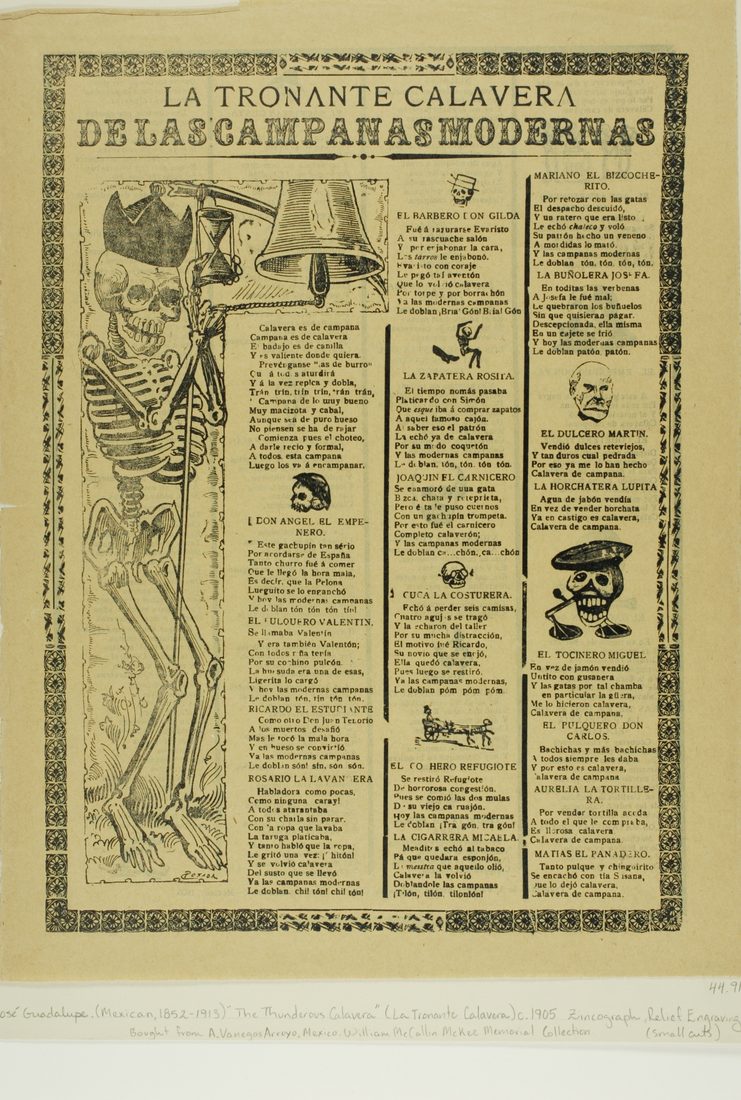
Art Institute of Chicago · CC0 · 2248 × 3337 px
native 7.5 × 11.1 in · 5×7 plate
AIC object 52011
52 hold 11×14 in · 58 hold 8×10 in · 77 hold 5×7 in · 1 postcard · 1 composite-only.
Works by other artists that arrived inside mixed download sets are set aside, not sold under Posada’s name.
8-Bracket Artistic Lineage Tree
From the Vanegas Arroyo press to Chicago’s Pilsen workshops
Open a bracket to follow the line. Bracket 1 traces the relief print from 1880s Mexico City to the printmakers of Chicago; Brackets 2 through 8 are reserved for lines still being researched and will be filled only when each link can be sourced.
Bracket 1The Penny Broadside Line
- c. 1830 – 1895 · Mexico CityManuel Manilla
The first illustrator-engraver at Antonio Vanegas Arroyo’s shop, from 1882. Curators now credit him as the originator of the satirical calavera; many sheets once given to Posada are being re-attributed to him.
Sources: NYPL · SNAC · Online Archive of California
- 1852 – 1913 · Aguascalientes → Mexico CityJosé Guadalupe Posada
Joined Vanegas Arroyo around 1890 and turned Manilla’s skeletons into a national image language, in type-metal engravings and zinc relief etchings for broadsides, chapbooks, corridos and games.
Sources: The Met · MoMA · Library of Congress
- 1880s – 1917 and after · Mexico CityThe Antonio Vanegas Arroyo Press
The popular publisher whose cheap color-stock sheets carried news, crime, disaster, ballads and Day of the Dead verse to people who could not afford a newspaper. Blocks by Manilla and Posada kept being reprinted long after both men died.
Sources: Princeton University Art Museum · Indiana University Libraries
- 1937 – present · Mexico CityTaller de Gráfica Popular
Founded by Leopoldo Méndez, Pablo O’Higgins and Luis Arenal, the People’s Graphic Workshop claimed Posada as its precursor and carried his socially conscious, widely affordable print forward — Méndez even cut a homage of Posada at work in his shop.
Sources: Library of Congress · LACMA · The Met
- 1923 – 2005 · Milwaukee → ChicagoCarlos Cortéz Koyokuikatl
Wobbly, poet and printmaker who settled in Chicago in 1965, co-founded the Movimiento Artístico Chicano (MARCH) in 1975, and cut large linocut and woodcut poster-portraits such as Joe Hill — work shaped by the TGP and by Posada.
Sources: Smithsonian American Art Museum · Hyperallergic · IWW archive
- 2010 – present · Pilsen, ChicagoInstituto Gráfico de Chicago
A Pilsen printmaking collective founded to continue the Latino print tradition. Its Grabadolandia fair marked the centennial of Posada’s death in 2013, and the National Museum of Mexican Art commissioned it to recreate three of Cortéz’s print blocks for his centennial.
Sources: Denison Museum · National Museum of Mexican Art
Bracket 2Reserved
Slot open · to be filled when every link is sourced
Bracket 3Reserved
Slot open · to be filled when every link is sourced
Bracket 4Reserved
Slot open · to be filled when every link is sourced
Bracket 5Reserved
Slot open · to be filled when every link is sourced
Bracket 6Reserved
Slot open · to be filled when every link is sourced
Bracket 7Reserved
Slot open · to be filled when every link is sourced
Bracket 8Reserved
Slot open · to be filled when every link is sourced
Collector Editions & Pricing
Three ways to hold a broadside
| Edition | Price | What it is |
|---|---|---|
| Sleeved Native Plate5 × 7 in | $22 | One plate printed at its own native size, in an archival sleeve with a provenance card naming the holding institution and record number. |
| Single Plate8 × 10 in – 11 × 14 in | $45–$65 | One broadside on cotton rag, offered only at sizes its master file holds at 300 PPI. Price set by size. |
| Multi-Plate Composite Broadside18 × 24 in – 24 × 36 in · Edition of 100 | $100unframed$300framed | Several plates from one institution set at 1:1 on a warm bone sheet with hairline rules, plate IDs and a provenance footer. Numbered, with a signed certificate of authenticity. |
Every plate is printed from the holding institution’s master scan at 300 PPI or smaller — never upscaled, never enlarged. The institution and record number appear on every print. The underlying images are in the public domain; what you buy is the curation, the printing and the edition.
Collector’s Circle
First access to each numbered edition
Composite broadsides are limited to 100 per sheet design. Circle members hear first when a sheet opens, and which institution’s plates it carries.
Sister Galleries